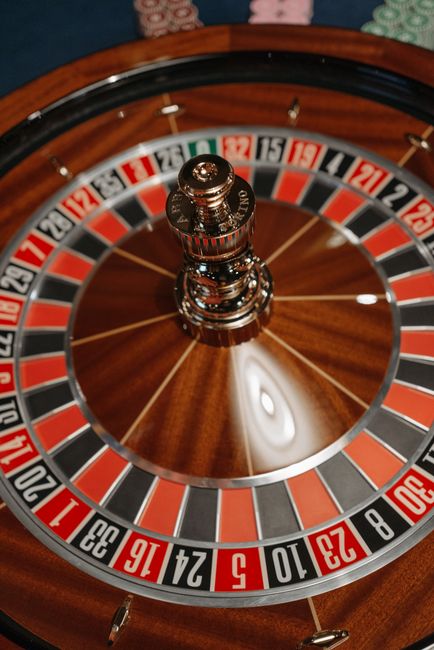


Walk into any casino and you'll see two kinds of people: those who treat the floor as an ATM and those who treat it as a game. Only one of those groups walks out with their rent money intact. The difference isn't luck, and it isn't some secret system sold in a $47 PDF. It's understanding what the house edge actually does to your bankroll over time — and knowing where your money has the best and worst chance of coming back to you.
iGaming gets a bad reputation because most coverage either glorifies the wins or moralizes about the losses. Neither is useful. What's actually useful is cold, practical math. Let's talk about it. A detailed guide is available at keonhacaii5.com.co.
Every casino game has a built-in mathematical advantage for the operator. This isn't cheating; it's the price of doing business, and it's published in the rules. Understanding that edge is the single most valuable skill a recreational player can develop.
Notice the pattern: table games offer tighter odds, slots offer wider margins. Every time you pull a lever or tap a spin button, you're accepting that margin. The players who understand this don't stop playing — they just choose the rooms where the edge is smallest and the volatility is survivable.
Everyone talks about RTP (return to player) percentages, but volatility is the number that actually determines whether you survive a session. A slot with a 96% RTP and low volatility will slowly nibble at your bankroll, releasing frequent small wins. A slot with the same RTP but high volatility will gut you fast — and occasionally hand you a 2,000x multiplier that makes the entire night feel legendary.
Here's a concrete example. "Book of Ra" variants and many Megaways titles sit in the high-volatility category. Their RTP might be 96.2%, but the feature triggers are rare, and your balance can halve before you ever see a bonus round. If you're playing with a $50 bankroll, mixing high-volatility slots with a small stake is a recipe for a ten-minute session. If you're playing with $500, they're a legitimate entertainment choice.
A practical rule: match your bankroll to volatility. Low volatility, 100+ spins per session. High volatility, 200+ spins minimum. Otherwise, variance will chew you up before the math has a chance to work.
Poker is the beautiful outlier in iGaming. The casino takes a rake — usually 5% capped at a few dollars — and then gets out of the way. Your opponent isn't a mathematical machine; it's ahuman being who gets bored, tilts, bluffs badly, and calls off their stack with second pair.
That means poker is beatable in a way slots never will be. But it's also brutally competitive. Twenty years ago, a solid grasp of pot odds and positional play was enough to crush low-stakes tables. Today, the average micro-stakes online player understands ranges, GTO approximations, and three-bet frequencies. The fish aren't gone — they've just moved to specific pools.
Where do softer games live? Usually in live low-stakes rooms, recreational online poker clubs, and tournaments with fast structures where amateurs outnumber grinders. If you're serious about poker profit, track every session. Split your results by stake and game type. Most players discover their win rate is concentrated in one narrow format and negative everywhere else — that's the signal to specialize.
No betting system overcomes the house edge long-term. But bankroll management keeps you in the game long enough to enjoy the variance when it swings your way. Here's the framework serious recreational players use:
A 2019 study by researchers at the University of Nevada, Las Vegas found that players who set predefined limits were significantly less likely to chase losses — the behavior most responsible for catastrophic sessions.
Sports betting feels different from slots because it rewards knowledge. You can genuinely know more about a team than the odds imply. But the margin is usually 4% to 7% on standard two-way markets, and the vig quietly erodes even winning records.
If you're winning 55% of $10 bets at -110 odds, you're profitable — barely. Win 53%, and you're essentially breaking even after variance. This is why line shopping matters enormously in iGaming. Getting -105 instead of -110 on a hundred bets can swing your results by hundreds of dollars over a season. Sharp bettors treat odds comparison as non-negotiable. Casuals treat it as an afterthought, then wonder why they're down after a good year.
Prop bets and live markets often carry higher margins than moneylines, but they also attract recreational money and softer pricing. Choose carefully where you give away your edge.
The players who come out ahead over years aren't the ones with the best system. They're the ones who combine an honest assessment of their skill with brutal discipline about stake sizes and session limits. They play games with low edges and high transparency. They treat sports betting like investing, not entertainment. And they walk away when the numbers say so.
iGaming is entertainment, and there's nothing wrong with paying for entertainment. But if you're going to play, play aware. Know the RTPs, respect volatility, shop your odds, and never bet more than the math can survive. The house always wins over infinite hands — your job is to make sure you don't play the infinite game.

The Sushi Course shares practical, down-to-earth guidance on sushi making courses and japanese culinary tuition for readers across the UK.


Leave A Comment